
Weeks 1–2
Pain
Calm the pain down.
Hands-on work to settle the irritated tissue and free the joint enough that sleeping and dressing stop being events.
What We Treat
Reaching for a seatbelt should not make you wince. Most shoulders improve without surgery. It is fixable, and it starts with a cause-first evaluation, not a guess.
Sound Familiar?
Two or more? Keep reading.
Why It Happens
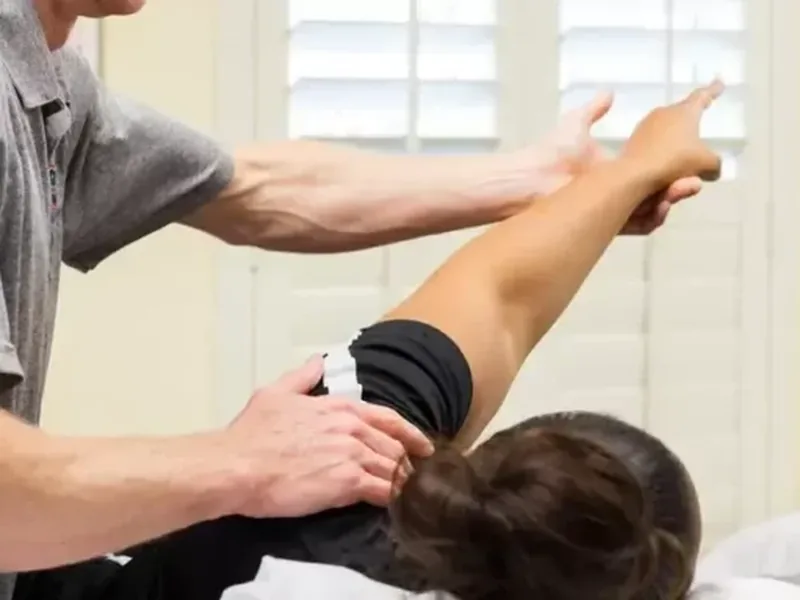
The shoulder is the most mobile joint you own, which means it depends on things around it behaving. Pain here usually traces to some mix of rotator cuff tissue that got overloaded, a shoulder blade that stopped moving properly on the ribcage, stiffness in the joint capsule itself, and a neck that is quietly feeding the whole thing.
That is why two people with the same scan can need completely different plans. A cause-first evaluation tests which structures still work and which do not, and treats the reason rather than the sore spot.
The Honest Truth
Nobody regrets starting too early. Plenty of people here wish they had started sooner.
How We Fix It
Every plan has an endpoint. Here is what the four phases look like for a shoulder.
Weeks 1–2
Pain
Hands-on work to settle the irritated tissue and free the joint enough that sleeping and dressing stop being events.
Weeks 2–6
Prime
Restoring the range you have lost, and retraining the shoulder blade so the joint has something stable to move on.
Weeks 6–10
Perform
Progressive rotator cuff and upper back strengthening, loaded in the ranges you actually need, not just the comfortable ones.
Weeks 10+
Prevent
We test the shoulder overhead and under load before you are cleared, whether real life means a barbell or a top shelf.
Three months ago I injured my rotator cuff. I was certain that I would need surgery. Fortunately, I found Sharon and Maxicare. After 3 months of therapy my shoulder is like new; full range of motion and NO pain. Best of all, no surgery!
Shared by Peter S. · Rotator cuff
Certain I was going to need rotator cuff surgery
Full range of motion, no pain, and no surgery
Questions, Answered
Very often yes, and plenty of shoulders never end up needing the operation. Even when surgery is the right call, going in with a stronger, better-moving shoulder gets you out the other side faster. An evaluation costs you an hour and tells you which situation you are in.
Overhead pressing through sharp pain, no. Loading the shoulder in ranges we have tested, yes, and it is usually the fastest route back. We work out what your shoulder tolerates today and build from there rather than telling you to rest and hope.
Most patients see a significant reduction in pain within six visits. A full plan for shoulder pain runs through all four phases, Pain, Prime, Perform and Prevent, and you will always know which phase you are in and what is left. That is a plan with an endpoint, not an open-ended string of appointments.
Book Your Visit
Request a time and a real person calls you back to confirm it. No phone tree. No ‘someone will reach out.’ Just a plan.
5.0 · 150+ Google reviews
Free discovery visit available
Step 1 of 5
That’s the hard part done. We’ll call during business hours to lock in your time and tell you what to bring.
Get in Touch